
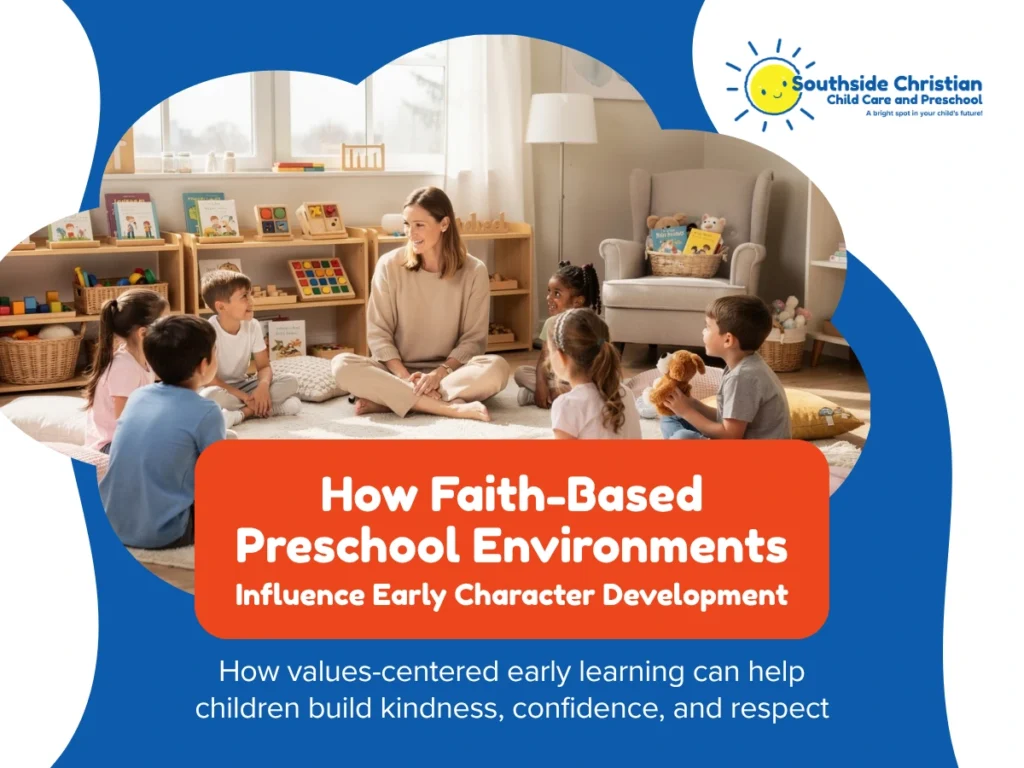
How faith-based preschool affects child development can be seen in how young children begin building character, compassion, and self-awareness during their earliest years of learning. In a nurturing preschool environment, daily routines, meaningful relationships, and age-appropriate guidance help children understand kindness, responsibility, patience, and respect.
When faith-based values are woven into these experiences, children are often encouraged to connect their actions with deeper principles such as honesty, gratitude, and care for others. This early foundation can support both emotional growth and social development, helping children form positive habits and a stronger sense of purpose as they learn, play, and grow.
Christian Daycare Benefits for Children in the Early Years
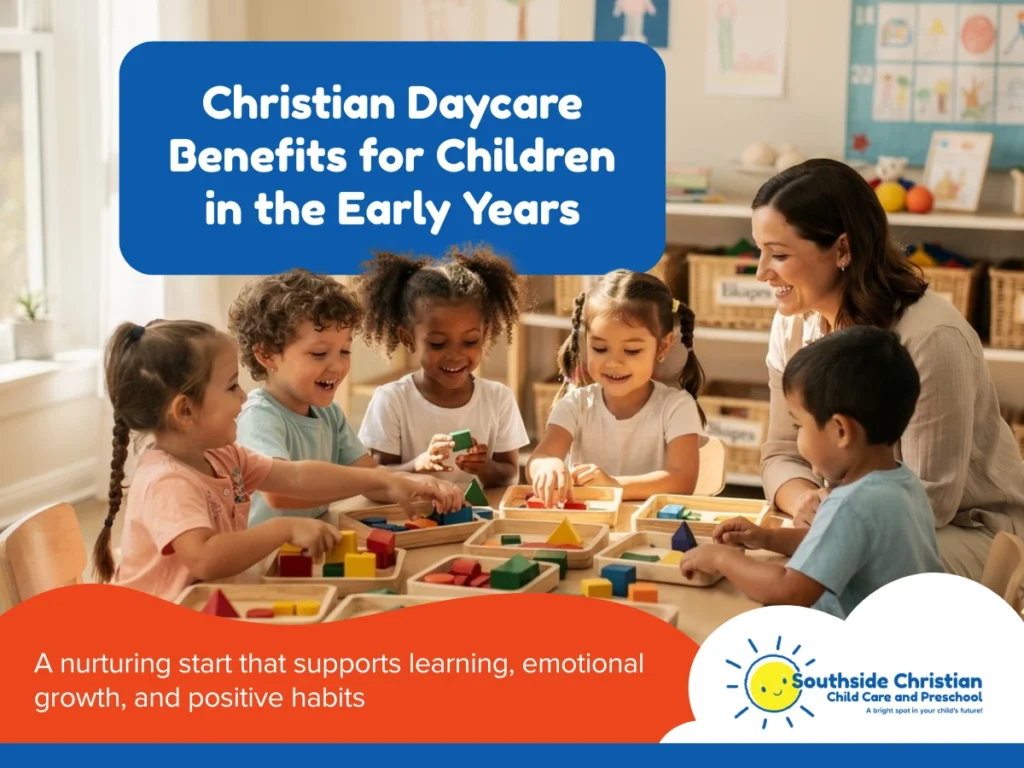
The early years are a meaningful time for shaping how children learn, relate to others, and respond to the world around them. For many families, one of the most valuable Christian daycare benefits for children is the balance of nurturing care, structured learning, and values-based guidance. In a supportive environment, children can begin building strong habits that support both school readiness and personal growth.
Building a Strong Daily Foundation
A high-quality Christian daycare environment provides children with the consistency they need to feel safe, confident, and ready to learn. Predictable routines, caring teachers, and age-appropriate expectations help young children understand responsibility and develop trust. These daily experiences create a stable foundation for healthy emotional and behavioral growth.
Encouraging Whole-Child Development
Faith-based early learning often supports more than just academic readiness. Children are encouraged to grow across several important areas, including:
- Social Skills: Sharing, taking turns, and learning how to work with others
- Emotional Growth: Expressing feelings appropriately and developing self-control
- Early Learning Skills: Strengthening attention, communication, and problem-solving
- Moral Awareness: Practicing kindness, honesty, and respect in everyday moments
Strengthening Character Through Everyday Experiences
A Christian daycare setting often weaves character lessons into regular classroom routines. Children may be encouraged to help a friend, listen carefully, show gratitude, or treat others with patience. These simple but meaningful moments help children understand how values can guide their actions each day.
Supporting Long-Term Growth
When children are introduced to both learning and character development early on, they often carry those lessons into later stages of school and life. They may enter future classrooms with greater confidence, stronger social habits, and a clearer understanding of respectful behavior. For families seeking a balanced early education experience, this can be one of the most lasting benefits of Christian daycare.
How Faith-Based Early Learning Outcomes Support Social and Emotional Growth
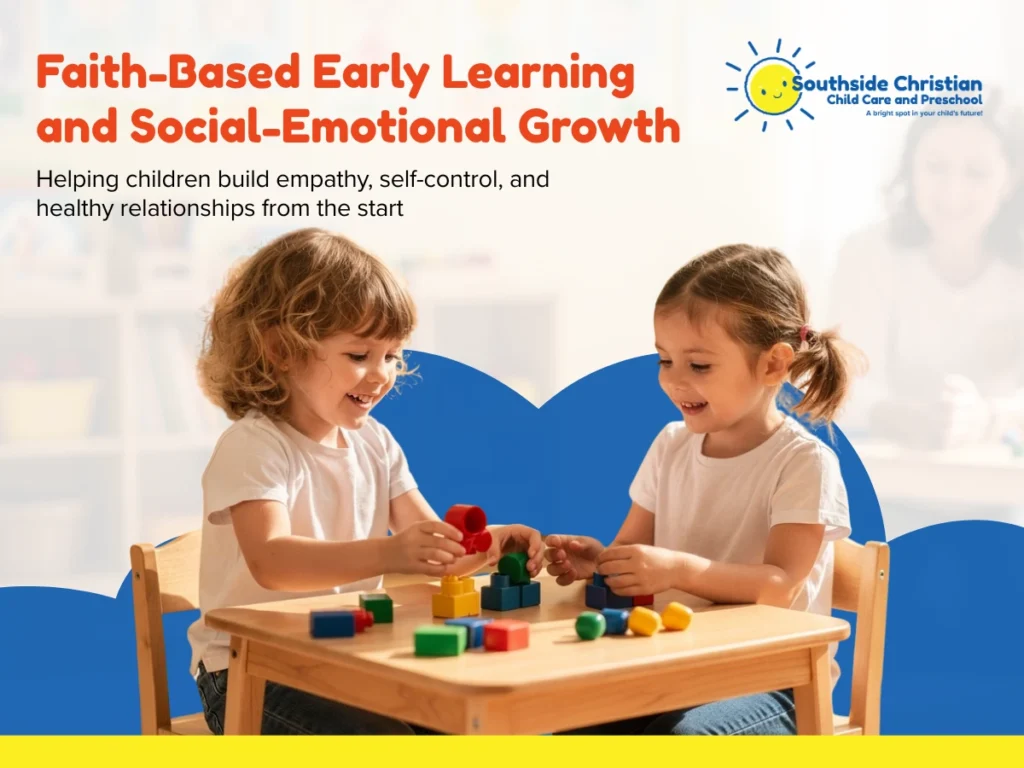
Faith-based early learning outcomes often extend beyond academic preparation by helping children develop the social and emotional skills they need for everyday life. In the early years, children learn to express feelings, interact with peers, and build trust with adults outside the home. In a values-centered preschool setting, these lessons are often supported through consistent routines, caring relationships, and daily guidance that encourages empathy, self-control, and respect for others.
Building Emotional Security Through Consistency
Young children thrive when they feel safe, supported, and understood. A faith-based early learning environment often provides predictable routines and gentle guidance that help children feel secure throughout the day. This sense of stability can support emotional growth by helping children:
- Develop confidence in new settings
- Learn how to manage transitions
- Build trust with teachers and classmates
When children feel emotionally secure, they are often more open to learning, participating, and forming healthy relationships.
Encouraging Positive Social Skills
Social development is one of the most important parts of early childhood education. In faith-based settings, children are often encouraged to practice kindness, patience, forgiveness, and cooperation during everyday classroom moments. Whether they are sharing materials, participating in group activities, or resolving simple conflicts, they are given repeated opportunities to learn how to treat others with care.
These experiences can help children strengthen skills such as:
- Sharing and turn-taking
- Listening and following directions
- Showing compassion toward peers
- Working through frustration in appropriate ways
Connecting Values With Daily Behavior
One of the strengths of faith-based early learning is that social and emotional lessons are often connected to clear values. Rather than only correcting behavior, teachers can guide children toward understanding why kindness, honesty, and self-control matter. Over time, this can help children develop stronger self-awareness and more thoughtful responses to others.
For many families, these faith-based early learning outcomes are valuable because they support both emotional maturity and positive character formation during a child’s earliest years.
The Role of a Character Development Preschool Environment in Daily Learning
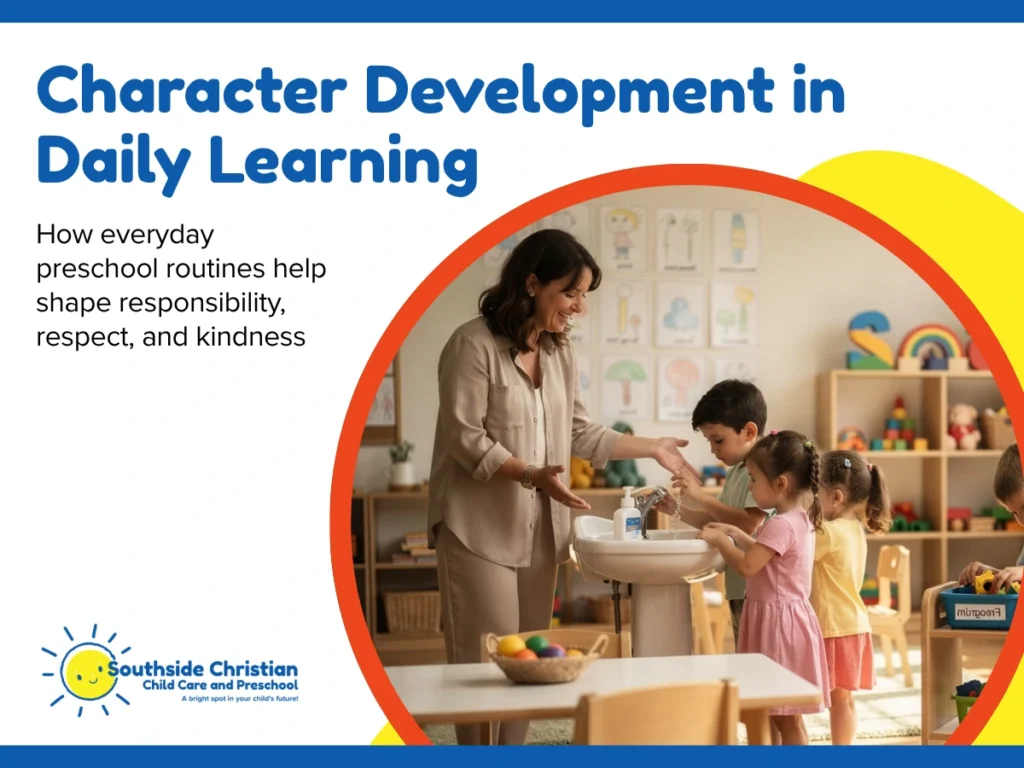
A strong character development preschool environment helps children learn that daily choices matter. In the early years, character is not taught through lectures, but through consistent routines, caring relationships, and guided practice. When values such as kindness, respect, responsibility, and honesty are part of the classroom culture, children begin to connect learning with behavior in meaningful ways.
Values Become Part of Everyday Routines
Character development is often most effective when it is built into ordinary moments. Greeting others politely, cleaning up after activities, listening during group time, and waiting for a turn all help children practice important life skills. These routines give teachers regular opportunities to reinforce positive behavior in ways that feel natural and age-appropriate.
Common daily habits that support character growth include:
- Using kind words with classmates
- Helping care for shared classroom spaces
- Following directions with consistency
- Showing patience during transitions
Teachers Help Turn Moments Into Lessons
In a character-focused preschool setting, teachers play an important role in guiding how children respond to challenges. Rather than only correcting behavior, they help children understand what respectful and thoughtful choices look like. A disagreement over a toy, for example, can become a lesson in sharing, empathy, and problem-solving.
This kind of guidance helps children begin to:
- Recognize their feelings
- Consider how their actions affect others
- Make better choices with support and repetition
Learning and Character Grow Together
A character development preschool environment supports more than behavior alone. It also strengthens the social and emotional skills children need for successful learning. When children feel secure, respected, and encouraged to treat others well, they are often better able to participate, cooperate, and build healthy relationships in the classroom.
Over time, these daily experiences can shape habits that last beyond preschool. Children begin developing a stronger sense of responsibility, greater self-awareness, and a clearer understanding of how to interact with others in positive, respectful ways.
Why Parent and School Partnership Strengthens Character Formation

Character formation is most effective when children receive consistent guidance from both home and school. In the early years, children learn to respond to others, follow expectations, and understand values through repetition and example. When parents and educators work together, children are more likely to experience the stability and encouragement needed to build strong habits that support both personal growth and positive behavior.
Consistency Helps Children Feel Secure
Young children benefit from clear and consistent expectations. When families and teachers reinforce similar values such as kindness, respect, honesty, and responsibility, children begin to understand that these behaviors matter in every setting, not just in the classroom. This consistency can strengthen both emotional security and behavioral growth.
Shared reinforcement often helps children:
- Understand boundaries more clearly
- Practice positive behavior with confidence
- Feel supported by the adults guiding them
Communication Builds a Stronger Foundation
A strong partnership between parents and schools creates more opportunities to support character development in meaningful ways. Regular communication allows families and teachers to share progress, address challenges early, and celebrate growth together. Small updates about how a child is learning to cooperate, show patience, or express emotions appropriately can help both sides respond with greater care and intention.
This partnership may include:
- Discussing behavior goals
- Sharing classroom routines with families
- Reinforcing positive habits at home
Children Learn Best When Adults Work Together
Children watch how adults interact, respond, and lead. When they see parents and teachers working together with mutual respect, they receive an important example of healthy relationships and shared responsibility. This partnership shows children that growth is a team effort and that the adults in their lives are united in helping them succeed.
Conclusion
Early childhood is a foundational stage for shaping how children learn, relate to others, and understand right from wrong. A faith-based preschool environment can support that growth by pairing strong early education with daily opportunities to practice kindness, responsibility, respect, and self-control. From social and emotional development to the steady influence of teachers and families, each part of the preschool experience can help build character in meaningful and lasting ways. For families seeking an environment that supports both learning and values, understanding how faith-based preschool affects child development can provide helpful guidance when choosing the right path for their child’s early years.
To learn more about Southside Christian Childcare and connect with their team, visit https://southsidechristianchildcare.com/contact/ or call (502) 244-2929.