
Signs your child is ready for preschool often show up in small, consistent moments at home and in social settings. While every child develops at their own pace, preschool readiness usually includes a mix of independence, communication, and comfort with simple routines.
Recognizing these signs can help you feel more confident about the timing and choose a program that supports a smooth transition. Below are five practical indicators to look for, along with what they may mean for your child’s next step. As you read, consider your child’s overall growth and how they handle new environments, guidance from adults, and time with other children.
1. Preschool Readiness Checklist: Independence Skills to Watch
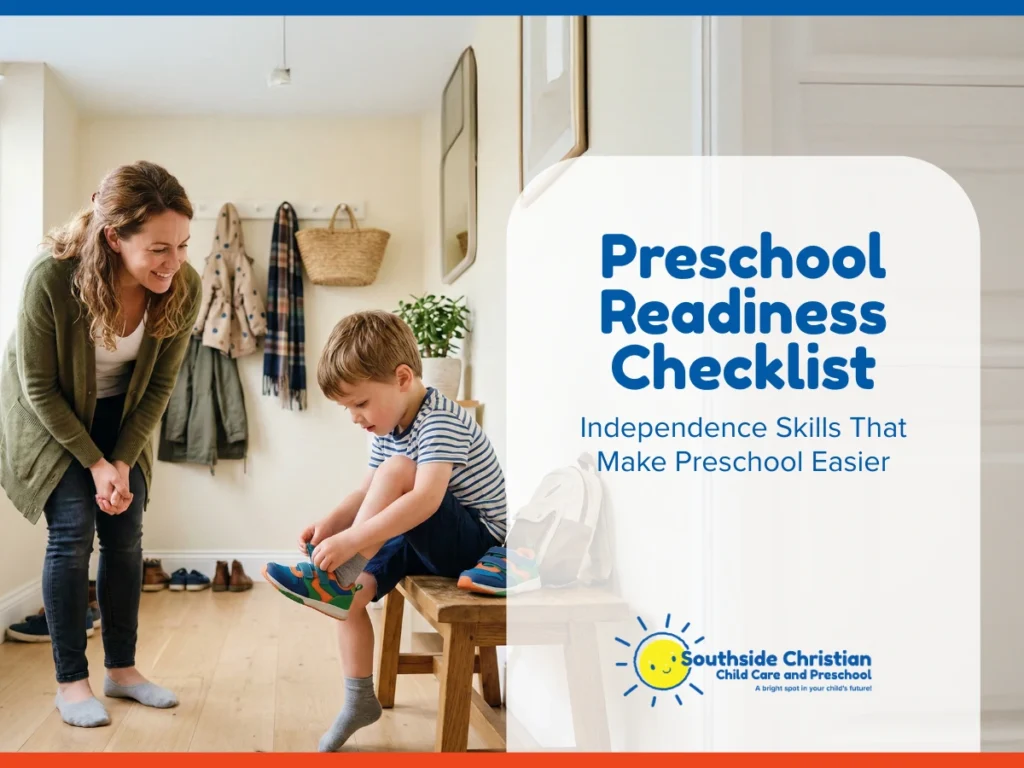
Independence does not mean a child can do everything alone. It means they are beginning to participate in daily tasks with guidance and can handle simple routines in a group setting. This preschool readiness checklist focuses on practical skills that help children feel confident and capable when preschool begins.
Self-Care Foundations
Look for steady progress in basic self-help skills. Many preschools can support children who are still learning, but a few early habits make the transition easier:
- Attempts to use the bathroom with reminders
- Washing hands with support
- Feeding themselves with minimal help
- Putting on shoes or a jacket with guidance
Following Simple Directions
Preschool requires children to respond to basic instructions, even when an activity is not their first choice. Readiness may include:
- Completing one or two-step directions
- Cleaning up toys when prompted
- Sitting for a short group activity like story time
Managing Personal Belongings
Children do not need perfect organization, but they benefit from recognizing and caring for their items. Helpful signs include:
- Knowing their backpack, lunchbox, or water bottle
- Trying to place items in a cubby or designated spot
- Bringing a teacher an item they need help with
If your child is still building these skills, that does not mean preschool is off the table. It indicates which areas to practice at home through consistent routines and calm encouragement.
2. Early Education Maturity Signs: Social and Emotional Readiness
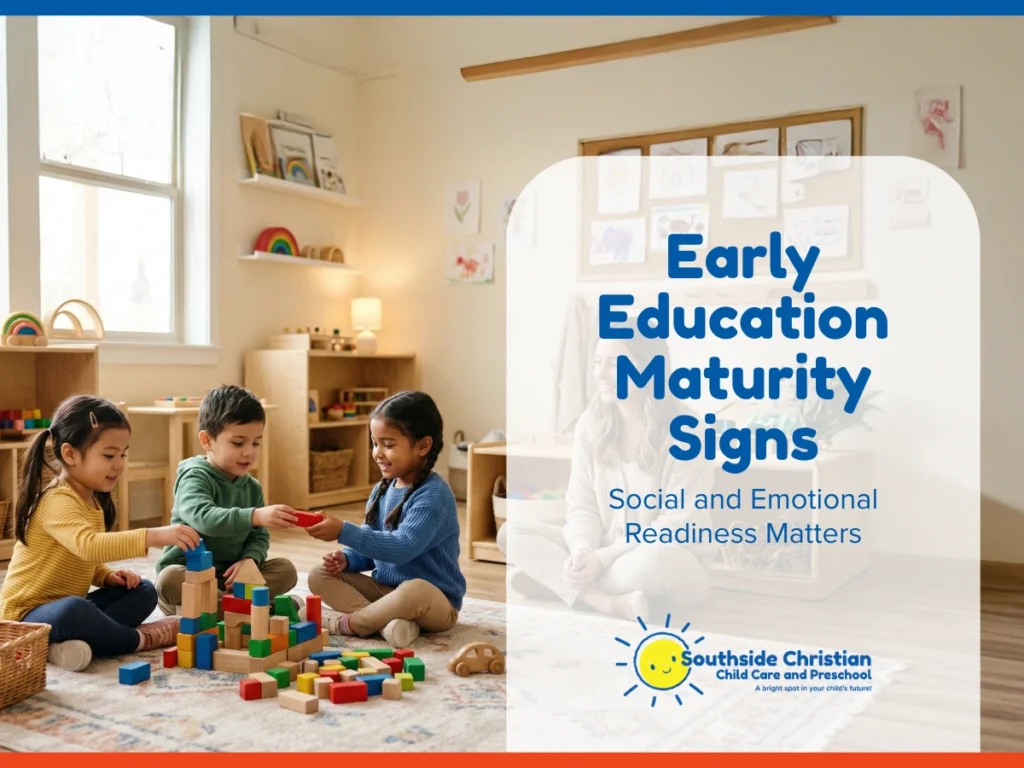
Social and emotional readiness is one of the most important early education maturity signs because preschool is built on group learning, sharing space, and learning to navigate feelings with support. Children do not need perfect behavior to start preschool. They do benefit from early skills that help them participate and recover when challenges come up.
Comfort Around Other Children
A ready child may show interest in playing near peers, joining simple games, or watching and copying what other children are doing. Look for signs such as:
- Engaging in parallel play without distress
- Taking turns with adult support
- Recovering after small social disappointments
Ability to Separate and Reconnect
Preschool often includes a brief separation at drop-off and a reunion later. Readiness may look like:
- Separating with a predictable routine, even with some tears
- Accepting comfort from a teacher or trusted adult
- Returning to play after reassurance
Early Emotional Regulation
Children will have big feelings in preschool. What matters is their ability to begin calming with guidance. Helpful signs include:
- Responding to a calm voice and simple choices
- Using words, gestures, or signals to express needs
- Tolerating short waits and transitions with reminders
If your child struggles in one of these areas, it can still be the right time to start, especially with a supportive program. Practicing simple routines, naming feelings, and modeling calm problem-solving at home can strengthen readiness over time.
3. Starting Preschool Guide: Communication and Learning Foundations
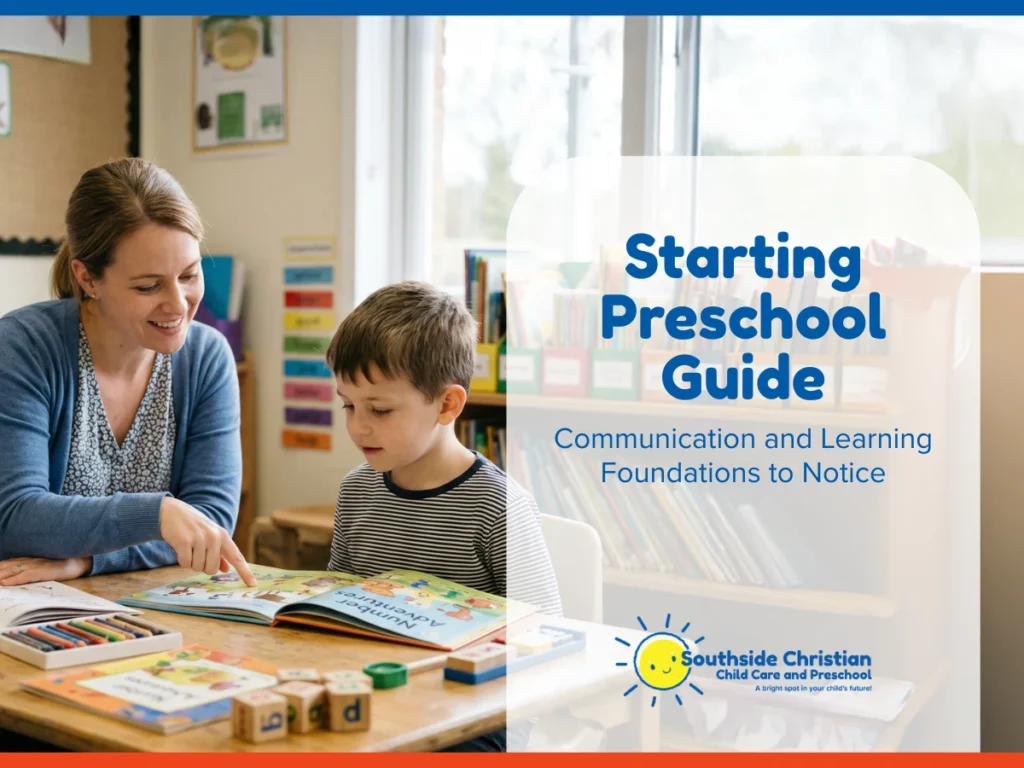
Strong communication and early learning habits help children feel secure in a new classroom. This starting preschool guide focuses on foundations that support participation, connection with teachers, and steady progress throughout the year.
Expressing Needs and Understanding Language
Children do not need advanced speech, but they should be able to communicate basic needs in a way adults can understand. Readiness may include:
- Using simple words or phrases for help, bathroom, hunger, or discomfort
- Answering basic questions such as “What is your name?”
- Following familiar classroom language like “line up,” “hands to yourself,” or “clean up”
If speech is still developing, ask how the preschool supports communication and whether they can work with your child’s current level while encouraging growth.
Early Learning Behaviors That Support Preschool Success
Preschool learning is often play-based, but it still requires attention, curiosity, and the ability to participate. Look for learning foundations such as:
- Interest in books, songs, puzzles, or pretend play
- Willingness to try new activities with encouragement
- Ability to sit for short group moments, like a story or a simple lesson
Comfort With Gentle Guidance
A child who is ready for preschool can accept redirection and respond to kind correction, even if it takes time. Signs include noticing adult cues, pausing when asked, and trying again after feedback. These skills support classroom harmony and help children build confidence as learners.
4. Comfort With Routines and Group Structure
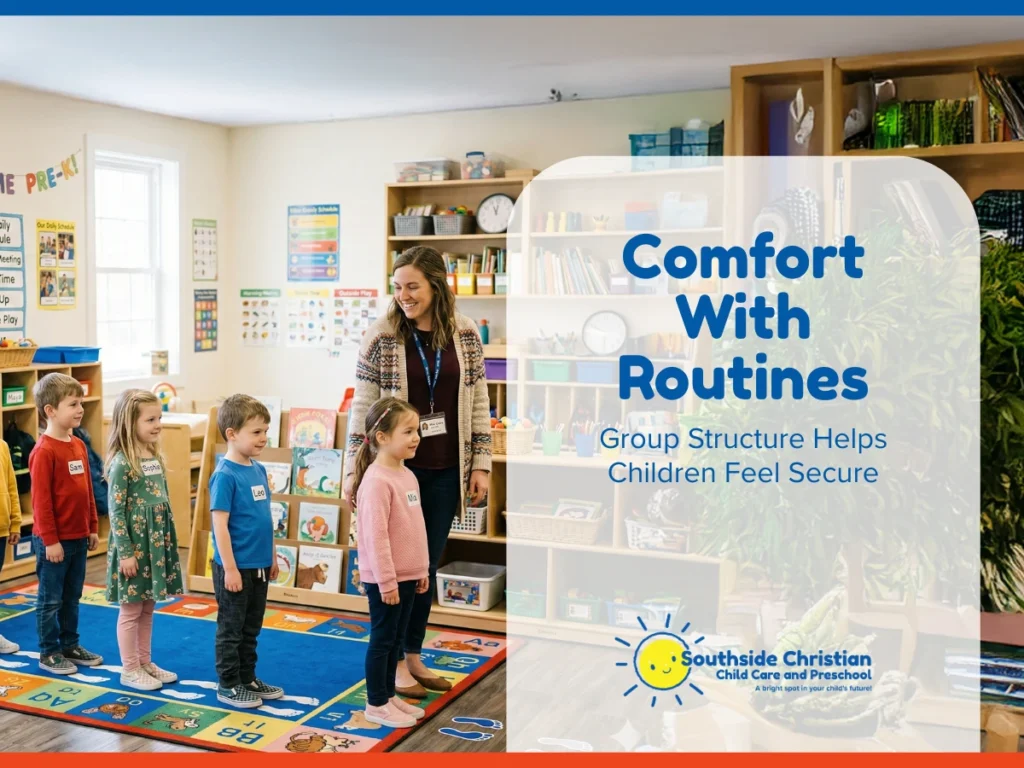
Preschool days follow a consistent rhythm, and children tend to do best when they can move through routines with guidance. Comfort with routines and group structure does not require perfection. It shows up when a child can participate in the classroom flow without becoming overwhelmed by transitions or expectations.
Adjusting to Daily Transitions
Many preschool challenges come during transitions, such as moving from playtime to cleanup or shifting from the classroom to the playground. Signs of readiness include:
- Accepting reminders when it is time to switch activities
- Participating in the cleanup with support
- Waiting briefly in line or at a table without distress
Handling Group Expectations
Group settings involve shared rules, shared space, and shared attention. Your child may be ready if they can:
- Sit for short group moments, like a morning meeting or story time
- Follow simple classroom rules, even with reminders
- Participate in structured activities such as crafts, music, or circle time
Following a Predictable Routine
Children benefit when they understand what comes next. Even if they cannot tell the time, they can learn the order of the day. Helpful signs include responding well to routines for meals, bathroom breaks, rest time, and outdoor play. Practicing simple patterns at home, such as a consistent morning routine, can make preschool feel more familiar and reduce stress during the first few weeks.
5. Curiosity, Attention, and Positive Separation Skills
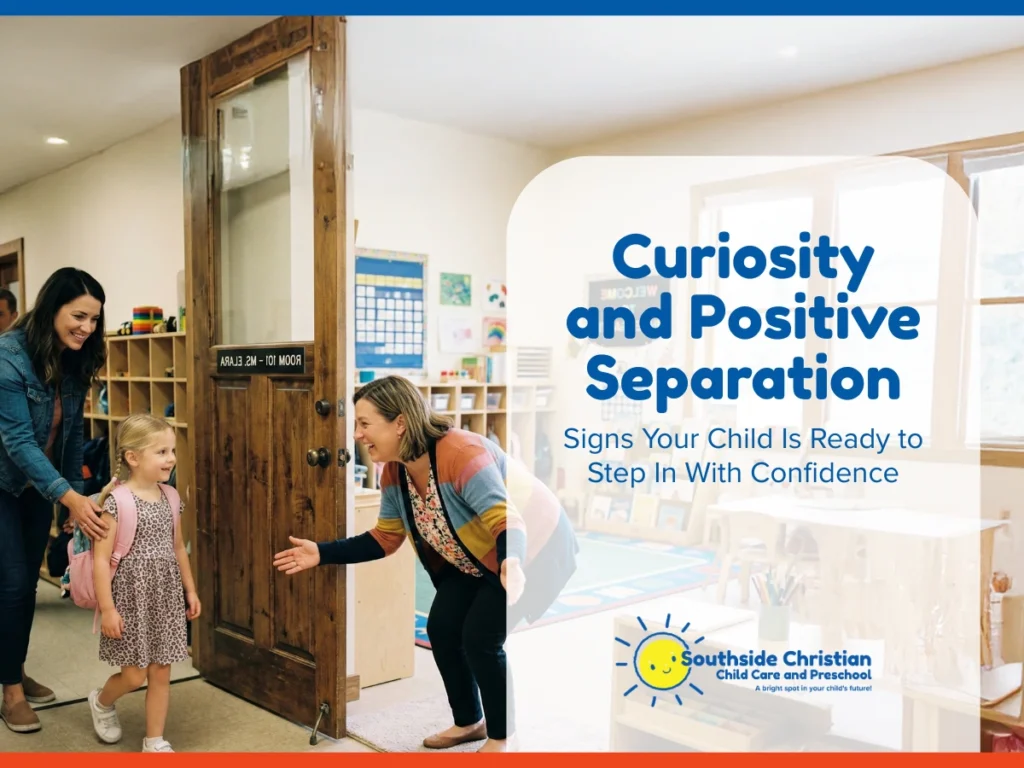
Curiosity and attention support learning, while separation skills support emotional security. When these areas develop together, children are more likely to engage in classroom activities and settle into the preschool routine with confidence.
Curiosity and Willingness to Explore
A preschool-ready child often shows interest in new materials, new people, and new experiences. This can look like asking questions, trying a new activity after watching others, or exploring a sensory bin, puzzle, or art project without hesitation. Curiosity does not need to be constant. It is enough for a child to show openness to learning when encouraged by a trusted adult.
Attention for Age-Appropriate Activities
Preschool requires short bursts of focus, not long periods of sitting still. Signs of readiness include:
- Listening to a short story
- Completing a simple craft with support
- Staying with an activity for a few minutes before moving on
- Returning to play after a brief interruption
Positive Separation and Reconnection
Many children feel emotional at drop-off, and that can still be normal preschool behavior. Readiness is often shown by recovery. Helpful signs include:
- A consistent goodbye routine
- Accepting comfort from a teacher
- Settling into an activity after reassurance
- Showing excitement or calm at pickup
If separation is a concern, practice short separations with predictable routines at home. A steady, confident goodbye helps your child learn that you will return, and that preschool is a safe place to grow.
Conclusion
Preschool readiness is not a single milestone. It is a combination of skills that develop over time, including independence, communication, emotional growth, and comfort with classroom routines. If your child shows several of these signs, preschool may be a positive next step that supports confidence, friendships, and early learning. If a few areas still need growth, that is also normal. With consistent routines at home and a supportive program, many children strengthen these skills quickly once they begin.
Ready to explore a preschool program that supports your child’s growth with care and purpose? Call (502) 244-2929 or connect here: https://southsidechristianchildcare.com/contact/.