
Faith-based child care enrollment guide resources can help Christian families make a confident, well-informed decision during an important season of change. Choosing a program is not only about hours and logistics. It is also about values, consistency, and the kind of environment that supports a child’s growth with care and purpose.
This guide outlines what to consider when comparing centers, including classroom structure and age-appropriate learning, as well as safety practices and parent communication. It also highlights practical steps that make enrollment smoother, including tour preparation, documentation, and transition planning for a successful start.
Christian Preschool Enrollment Tips for Choosing the Right Program
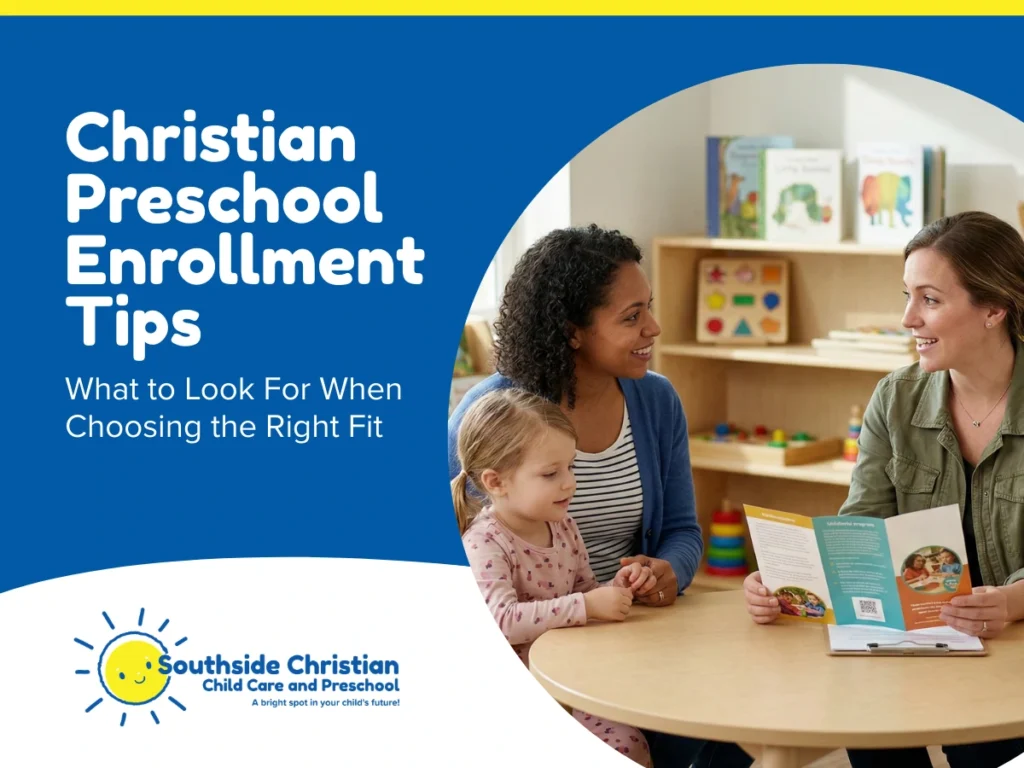
Choosing the right Christian preschool starts with clarity on what your family needs and what the program consistently delivers. The goal is to find a setting where your child is known, supported, and guided with care while also receiving strong early learning foundations.
Confirm Age Groups and Program Fit
Begin by confirming that the preschool serves your child’s current age and supports the next stage of development. Ask how classrooms are structured by age and readiness, and whether transitions are handled gradually or at set points during the year. If your child is moving from toddler care into preschool, ask how the center supports that adjustment with consistent routines, familiar caregivers, and clear expectations.
Review Curriculum and Daily Learning
A strong program should explain what children learn and why it matters. Ask for a sample daily schedule and look for a balanced rhythm that includes:
- Hands-on learning and guided play
- Early literacy and number concepts
- Fine motor development, art, and sensory activities
- Outdoor time and movement
- Rest periods and quiet activities
Also, ask how faith is reflected in an age-appropriate and welcoming way. The best programs integrate values through kindness, respect, and character-building moments that feel natural throughout the day.
Ask About Teacher Support and Consistency
Teacher stability and classroom support impact everything from behavior guidance to academic readiness. Ask practical questions such as:
- What training do teachers receive each year?
- How does the program support social-emotional development?
- How are classroom challenges handled in a calm, consistent way?
A quality preschool will describe clear systems for guiding behavior, supporting independence, and encouraging positive peer interactions.
Evaluate Communication and Parent Experience
Strong parent communication is a major indicator of quality. Ask how the school shares updates and how quickly families can expect responses. Look for a center that provides:
- Daily reports or summaries of meals, naps, and activities
- Photos or classroom highlights when possible
- Clear policies and reminders that reduce confusion
- Scheduled check-ins or progress conversations
Finally, trust the tour experience. A program that communicates clearly, answers questions directly, and demonstrates thoughtful routines often reflects the same consistency in the classroom.
Faith-Centered Child Care Benefits to Look for During Your Search
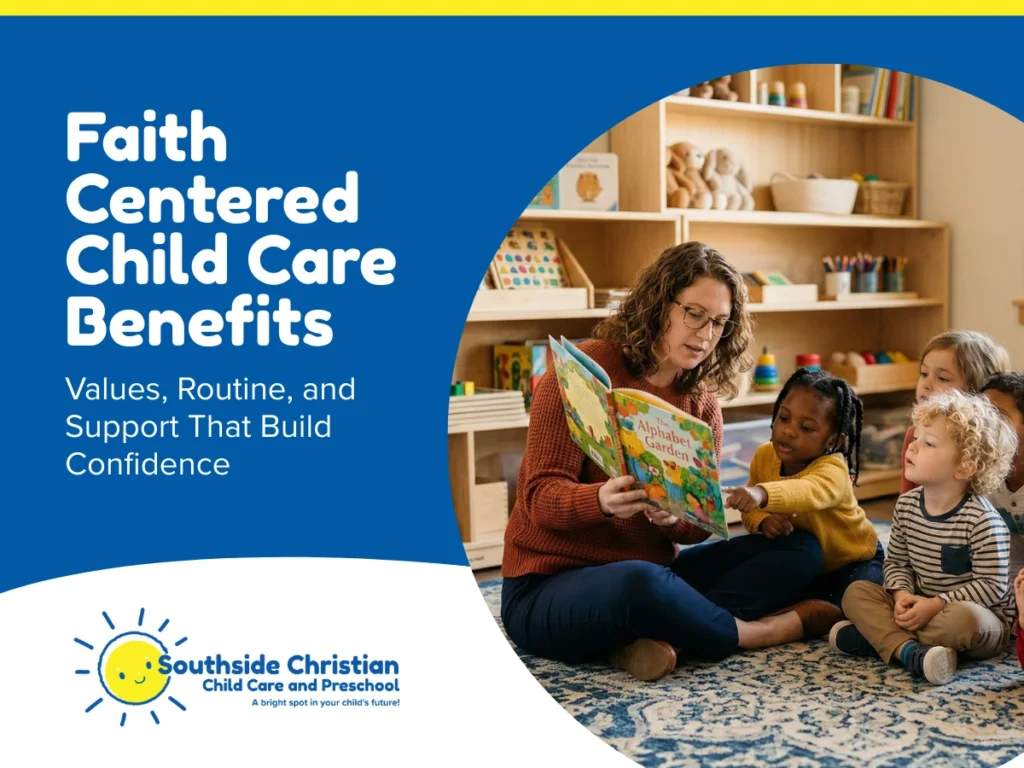
One of the most meaningful faith-centered child care benefits is the way values show up in everyday moments. Look for programs that consistently reinforce kindness, respect, honesty, and responsibility in ways young children can understand. Ask how teachers model these values, how they encourage empathy between classmates, and how they help children practice good choices during play, meals, and transitions. A strong program will describe clear expectations and gentle guidance that support both confidence and accountability.
Consistent Routines That Support Social-Emotional Growth
Children thrive when the day feels predictable and safe. Faith-based centers often emphasize steady routines that help children feel secure while learning independence. During your search, ask how the program supports:
- Separation and drop-off transitions
- Emotional regulation and calming strategies
- Friendship skills, sharing, and conflict resolution
- Encouragement for independence in age-appropriate ways
Consistency across classrooms is also important. When staff use similar language and expectations throughout the day, children adjust more easily, and behavior improves over time.
A Supportive Community for Children and Parents
A faith-centered environment can provide a stronger sense of connection for families who value shared beliefs and supportive relationships. During tours, notice whether the atmosphere feels welcoming and whether staff show genuine care for family partnerships. Helpful signs include clear communication, respectful conversations, and an organized approach to addressing concerns. Ask how parents are kept informed and how the center encourages family involvement in ways that feel realistic for working schedules.
Learning Through Play, Exploration, and Early Academics
Faith-based care should still offer a strong academic foundation through developmentally appropriate learning. Ask how teachers blend hands-on activities with early skill building, including language development, early math concepts, and fine motor strength. A well-rounded program often includes:
- Guided play with purposeful learning goals
- Story time, songs, and vocabulary development
- Art, sensory activities, and problem-solving tasks
- Outdoor play and movement for healthy development
When reviewing options, look for a center that can clearly explain its teaching approach and how it prepares children for the next step, whether that is preschool, pre-K, or kindergarten.
How to Enroll in Christian Child Care Step by Step
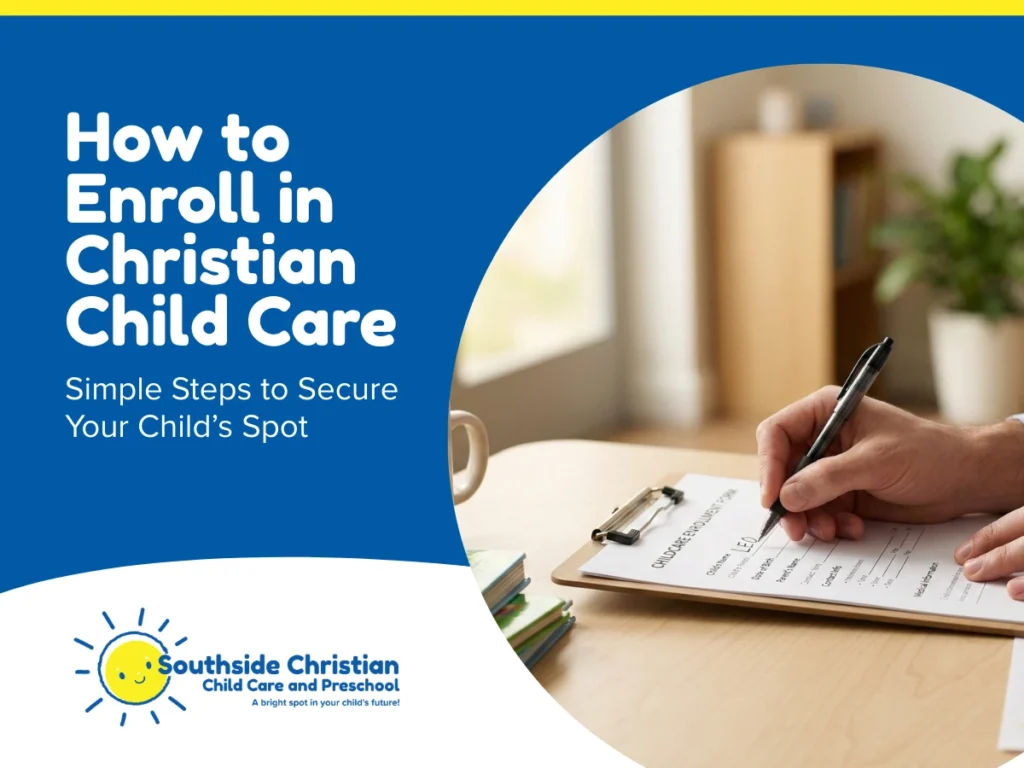
The first step is to schedule a tour so you can see the environment, meet the team, and understand the day’s structure. Arrive with a short list of questions that clearly help you compare options. Consider asking about classroom ratios, daily routines, behavior guidance, faith integration, communication tools, and how the center supports new students during the first few weeks. If your child has specific needs, ask how teachers individualize support while still maintaining consistent classroom expectations.
Gather Required Enrollment Documents
Most centers will request a standard set of documents before a child can begin. Preparing these early helps prevent delays, especially when waitlists are involved. Common items include:
- Enrollment forms and emergency contact information
- Immunization records and health paperwork
- Authorized pickup list with photo ID requirements
- Allergy documentation and medication authorizations, if needed
- Tuition agreement and payment setup details
Ask whether forms can be completed online and whether a deposit is required to hold a spot.
Review Policies, Tuition, and Payment Details
Before submitting paperwork, take time to review the center’s policies so expectations are clear from the beginning. Focus on the policies that affect daily life and long-term planning, such as illness guidelines, drop-off and pickup procedures, holiday schedules, tuition due dates, late fees, and any supply fees. If part-time options are available, confirm the days and hours in writing. Also, ask what happens if your needs change mid-year, including schedule adjustments or classroom transitions.
Complete Forms, Confirm Start Date, and Plan the Transition
Once you submit forms and secure placement, confirm your child’s start date and ask what the first week typically looks like. Many centers offer transition support, such as shorter first days or a gradual adjustment plan. To help your child feel prepared, clarify what to bring and how to label items. A simple checklist can help:
- Extra clothing and diapers, if applicable
- A comfort item for rest time, if allowed
- Any required supplies for the classroom
- Notes for teachers about routines, sleep, or food preferences
Finally, confirm how updates will be shared once your child starts. Clear communication from day one supports a smoother transition for both children and parents.
Final Checklist Before You Submit Your Enrollment
Before submitting your enrollment, confirm the exact classroom your child will be placed in and the schedule you are securing. This helps prevent confusion about start dates, part-time days, and daily hours. Ask whether the center uses set classroom promotions by age or readiness, and whether there are transition windows during the year. If your child is joining from a waitlist, request written confirmation of the agreed-upon start date and any deposit or holding terms.
A quick schedule review can include:
- Drop-off and pickup times you will follow
- Any extended care options you plan to use
- Planned days off, holidays, and closures
- How schedule changes are handled if your needs shift
Recheck Documentation and Immunization Requirements
Enrollment can stall when paperwork is incomplete, so it helps to review everything one last time. Confirm that all required forms are filled out, signed, and dated. If the center requires health documentation, verify what is needed before your child’s first day and what can be submitted afterward.
Most families should double-check:
- Immunization records and any required health forms
- Allergy plans, medication authorizations, and dietary notes
- Emergency contacts and authorized pickup list
- Custody or legal documentation, if applicable
- Tuition agreement, payment method, and billing contacts
If your child has allergies or medical needs, confirm that the plan is clearly documented and that the classroom team has access to it.
Save Key Contacts and Communication Channels
After your paperwork is ready, make sure you know exactly how communication will work once your child begins. Many centers use a parent app, email updates, and front desk communication, but procedures vary. Ask where to send questions, how quickly responses are typically provided, and where updates about closures or reminders will be posted.
Before you submit, save:
- The main phone number and office email
- Your center director’s name and contact method
- App login details and notification preferences
- The process for reporting absences or late pickups
Final Review Before Submission
Take two minutes for a final scan. Confirm that names are spelled correctly, contact numbers are accurate, and pickup permissions are complete. A careful final review supports a smoother first week, reduces follow-up paperwork, and helps your family start with clear expectations and confidence.
Conclusion
Choosing a faith-based child care program is a meaningful decision, and the enrollment process is easier when you approach it with clarity and preparation. From evaluating program fit and daily learning to confirming communication, safety practices, and required documentation, each step helps you select a center where your child can grow with confidence. As you compare options, look for consistency in values, thoughtful routines, and a team that treats families with respect and care. A strong start begins with asking the right questions, understanding expectations, and planning a smooth transition for your child.
Ready to take the next step? Call (502) 244-2929 or contact the team here: https://southsidechristianchildcare.com/contact/.